
About

Scott Burkhalter

Founder and principal engineer · Kithara LLC

Kithara is one principal engineer, by design. The person who reviews your architecture is the person who writes the code and carries the outcome — nearly four decades of it, most recently as platform lead of an agent-native data platform.

I've lived a lifetime in the tech industry. As a leader I'm a supportive builder of motivated teams delivering high-quality systems with clear architecture, pragmatic strategies, negotiated roadmaps, reduced complexity, and managed risk. I've spent decades taking projects from conception through delivery — proofs of concept, spikes, MVPs, and iterated scope — and I've done it from both sides of the org chart, as a Director and VP of Engineering and as a hands-on principal engineer. These days I choose the hands-on side.

The work I love most is envisioning a platform, designing its architecture, and then building it — taking a system from a whiteboard sketch to services with real boundaries, and staying with it through production and everything production teaches you. I call that system-oriented architecture: SOA, with the S reassigned. The acronym is spoken for and I am taking it anyway, because the original stops at the service boundary, and almost everything that decides whether a platform is good to build on lives outside it. A system is more than its source code — it is the code together with the infrastructure that runs it, the pipelines that ship it, the operational scripts that keep it honest, and the local environment an engineer opens every morning. Design one of those in isolation and you have designed a fragment.

It is also why the parts nobody demos matter to me as much as the diagram does: a CLI that turns a day of infrastructure wiring into one command, a load test that replaces an assumption with a number, an IAM policy layer that fails the build instead of failing in production. That is where an architecture stops being a drawing and starts being a system. I care about measuring before optimizing, leaving systems more legible than I found them, and mentoring engineers toward the same instincts.

Portrait of Scott Burkhalter
Ravensdale, Washington
Remote-first · Pacific time
scott@soultech-solutions.com
linkedin.com/in/scottburkhalter
Track record

Four decades, abbreviated

  • 2025 —
    Senior Staff Engineer, platform lead · seed-stage AI data platform
    Technical direction of the platform layer from proof of concept to production. See Case 01.
  • 1994 —
    Owner & principal consultant · Kithara LLC
    Started in Michigan as a DBA and contracted under it ever since; an LLC today, renamed from SoulTech Solutions to Kithara in 2026. The consulting practice, and the home for my own product work — The Fudger, a three-tier product built solo and now approaching beta.
  • 2022
    VP of Engineering · curated gifting platform
    Cloud and microservice platform growth through a B2C-to-B2B expansion.
  • 2021–2022
    Head of Engineering · live e-learning platform
    All of engineering for a K-12 live-learning product: architecture, delivery, mentoring.
  • 2019–2021
    Principal Engineer, consultant · national streaming platform
    Catalog, live and VOD scheduling, ad breaks, worldwide manifest delivery; infrastructure as code and CI/CD from scratch; load testing for a global sporting event.
  • 2016–2019
    Director of Engineering · ed-tech marketplace, later public
    Infrastructure and paid-marketing engineering: monolith to 50+ services, cloud foundation from zero, ad-integrity platform at billions of keywords.
  • 1988–2016
    Senior engineering · retail, e-commerce, enterprise
    ETL and data-aggregation platforms, RESTful services on early AWS, and nearly three decades of hands-on delivery before that — client/server, the first web era, and the arrival of the cloud.
Platform & cloud
AWS · Pulumi · Terraform
ECS · Fargate · Lambda
EventBridge · SQS · SNS · S3
Kubernetes · multi-account org design
IAM & least privilege · VPN
PrivateLink · internal ALB
Languages & delivery
Go · Python · TypeScript
Java · J2EE · C# · C++ · C
Ruby · Bash
CI/CD & release engineering
infrastructure as code
load & capacity testing
observability · runbooks
AI & agentic
sandboxed code execution
tiered compute for agents
capability APIs
MCP servers & clients
brokered credentials
Claude · Codex · Gemini
agent-assisted planning, review
& dependency triage in the SDLC
Why Kithara

The company is named for an instrument

κιθάρα · cithara · guitar

In 2026 SoulTech Solutions became Kithara LLC. Same company, same engineer, a name with more of my life in it.

The kithara was the concert instrument of ancient Greece. Amateurs learned the lyra, a small lyre built on a tortoise shell. The kithara belonged to professionals: kitharodes, who sang to their own playing, toured, and competed for some of the richest prizes of their world.

Its name is also the root of the word guitar, the instrument I’ve played professionally for most of my life. A working musician’s instrument, for a working engineer’s company.

Spec · Kitharac. 7th c. BC
YOKEARM7 STRINGSSOUNDBOX
Strings
Seven, by tradition from Terpander on
Body
Heavy wooden soundbox, hollow arms, crossbar
Technique
Played standing; plectrum in the right hand, left hand plucks and damps
Players
Kitharodes: professional singer-performers
Lineage of a word
  1. κιθάραGreek
  2. citharaLatin
  3. qīthāraArabic
  4. guitarraSpanish
  5. guitarEnglish

Same root, other branches: zither, and the medieval cittern and gittern.

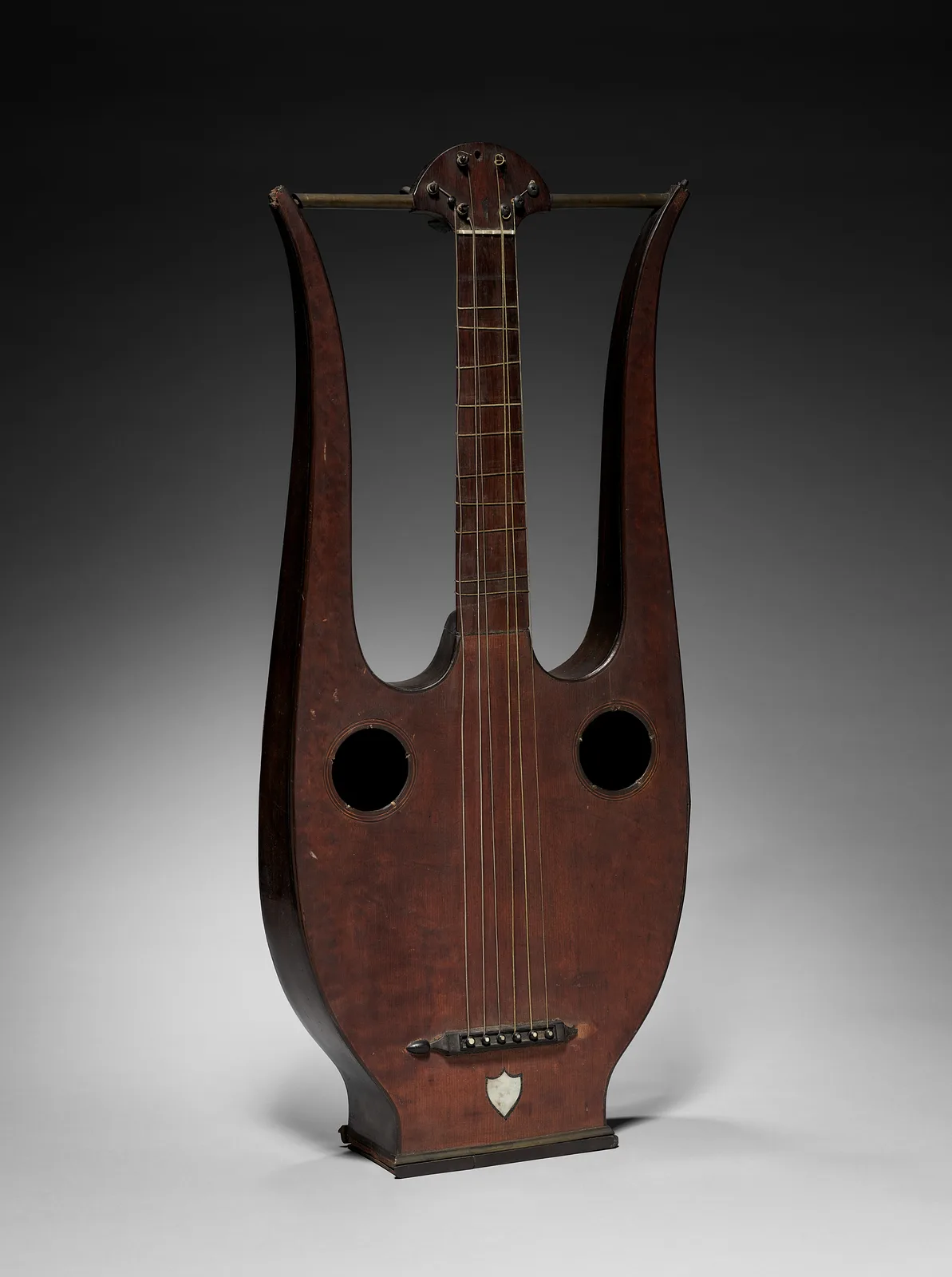
An honest footnote: the guitar inherited the name, not the body. Its shape comes from the lute family. A few makers later tried to give it the body back: the lyre-guitar puts kithara arms on a guitar.

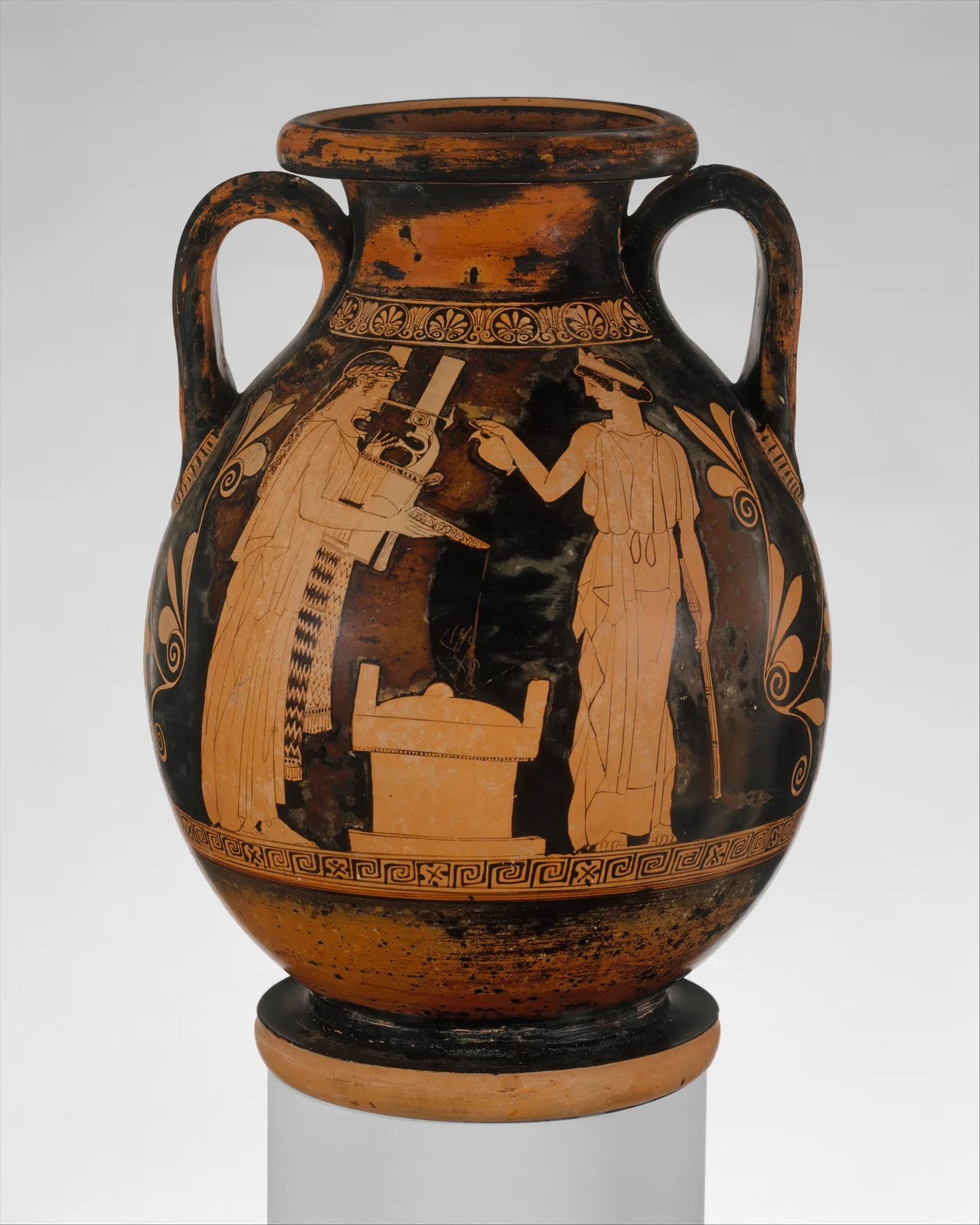
Red-figure jar: Apollo holding a kithara faces Artemis
κιθάρα · Apollo with kithara, red-figure pelike. The Met, Rogers Fund, 1906 (06.1021.191)
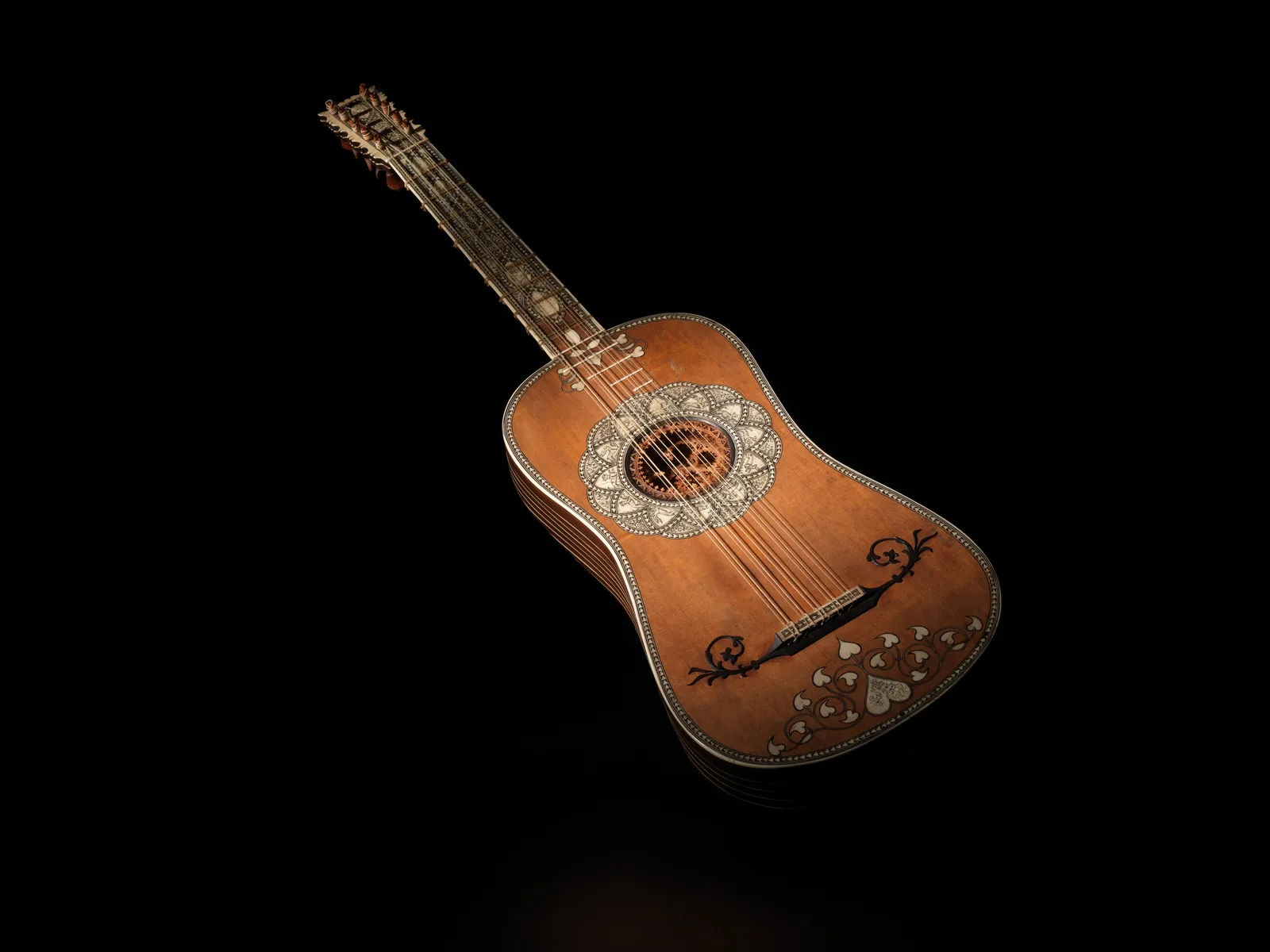
Baroque guitar with an inlaid body and rose, on black
guitar · Guitar attributed to Matteo Sellas, Venice, c. 1630–50. The Met, 1990.103
Lyre-guitar: a guitar neck and strings set between two curved lyre arms
both · Lyre-guitar, Italy, late 1600s. Cleveland Museum of Art, Gift of Ralph King, 1918.379
Release history · 676 BC – 400 BC

A changelog written in strings

The kithara’s string count changed slowly, and never without an argument. Sparta, it turns out, ran change control.

v7c. 676 BC
Terpander of Lesbos

Ships the seven-string standard

Tradition credits Terpander with fixing the kithara at seven strings, and with winning the first music contest at Sparta’s Carneia festival.

A later story says an oracle sent him to Sparta when the city was tearing itself apart in a civil feud, and that his music ended it. True or not, Sparta treated his seven strings as the spec for the next two centuries.

Source: Plutarch, On Music; the Parian Marble
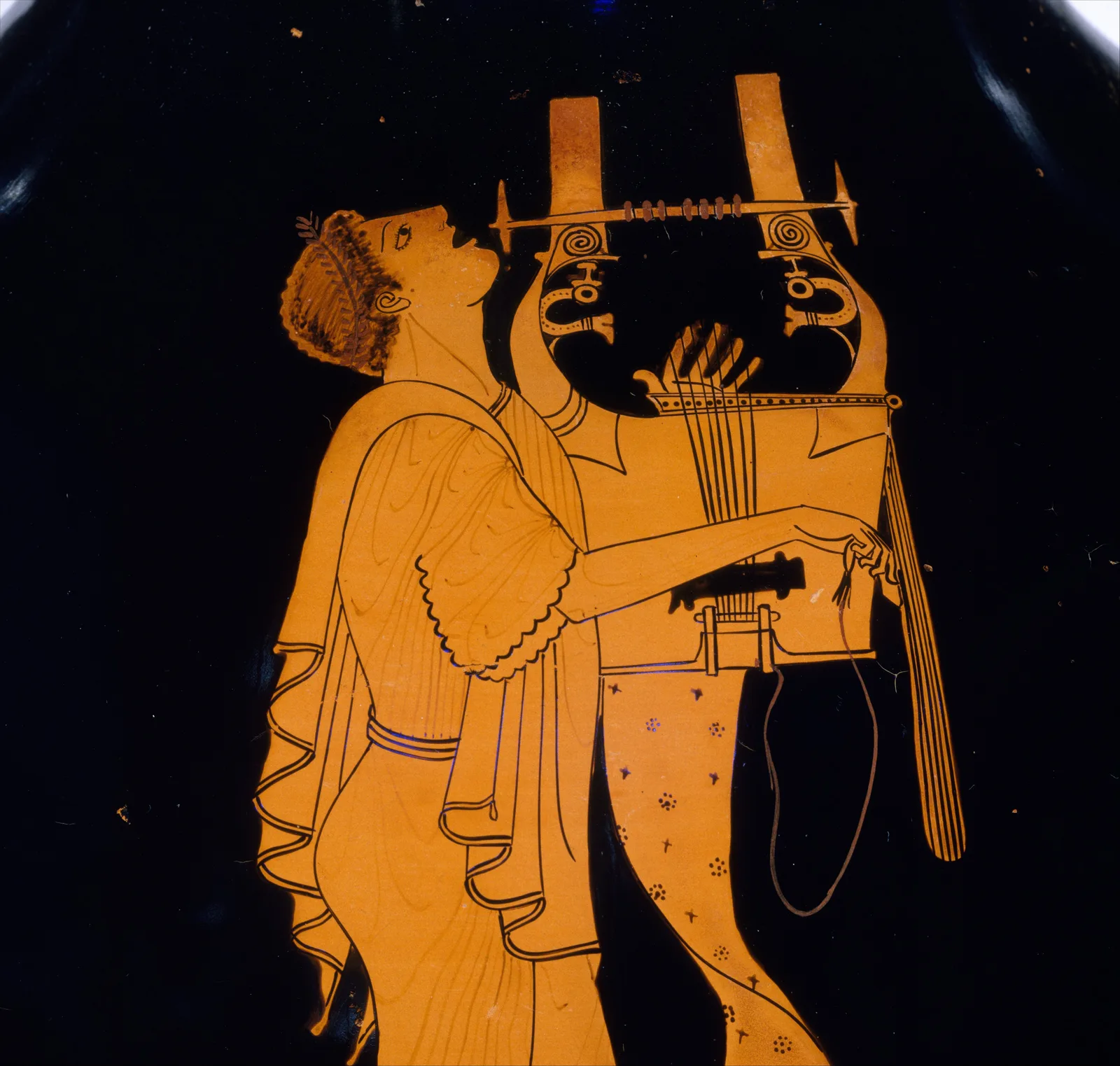
A young kitharode in a long robe, head thrown back in song, playing a seven-string kithara; red-figure on black
Kitharode, amphora attributed to the Berlin Painter, c. 490 BC. The Metropolitan Museum of Art, Fletcher Fund, 1956 (56.171.38)
v9c. 445 BCReverted → v7
Phrynis of Mytilene

The Spartan who cut the strings

Phrynis was the virtuoso of the 5th century BC. Around 445 BC he won the first music contest Pericles added to the Panathenaic festival in Athens, playing a nine-string kithara in a newer, looser style that traditionalists couldn’t stand.

Then he played Sparta. The magistrate Ecprepes heard him, took a blade to the instrument, and cut two of the nine strings. He did give Phrynis one choice: lose the top two, or the bottom two.

Ancient extended-range players were warned.

Source: Plutarch, Life of Agis 10
9 STRINGS IN2 OUT7 LEFT · SPARTA-COMPLIANT
No image of Phrynis survives. A drawing does the job.
v11c. 400 BC
Timotheus of Miletus

“Away with the old Muse”

Phrynis’s student went further: eleven strings by most accounts, and music wild enough to scandalize his elders. A surviving fragment of his verse reads like every engineer who ever rewrote legacy code: I don’t sing the old songs, my new ones are better.

A later tradition says Sparta formally censured him for adding strings and corrupting the youth. That decree is almost certainly invented. People quote it anyway.

Source: Timotheus, fr. 796 PMG; the “Spartan decree” preserved by Boethius
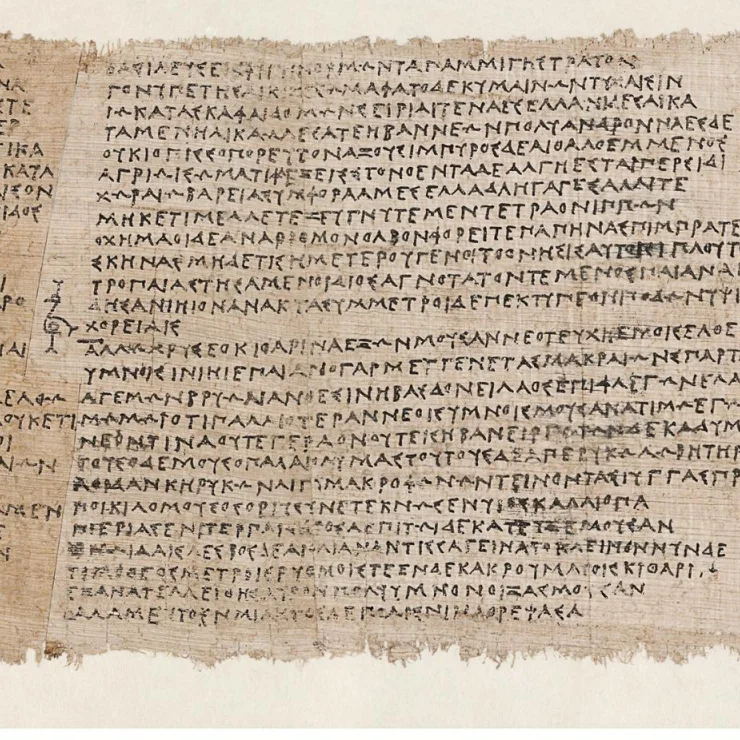
Close-up of a papyrus column of Greek capitals, with a bird-shaped mark in the left margin
Detail: the bird-shaped mark opens Timotheus’s sign-off, where he answers his Spartan critics. Near the bottom he names himself and his eleven-stroke kithara.
A long horizontal strip of papyrus with columns of Greek text: Timotheus’s Persians
Timotheus, Persians. Papyrus, 4th c. BC, the oldest surviving Greek literary papyrus. Staatliche Museen zu Berlin, P. 9875. Photo: Sandra Steiß, CC BY-SA 4.0
Two from the road
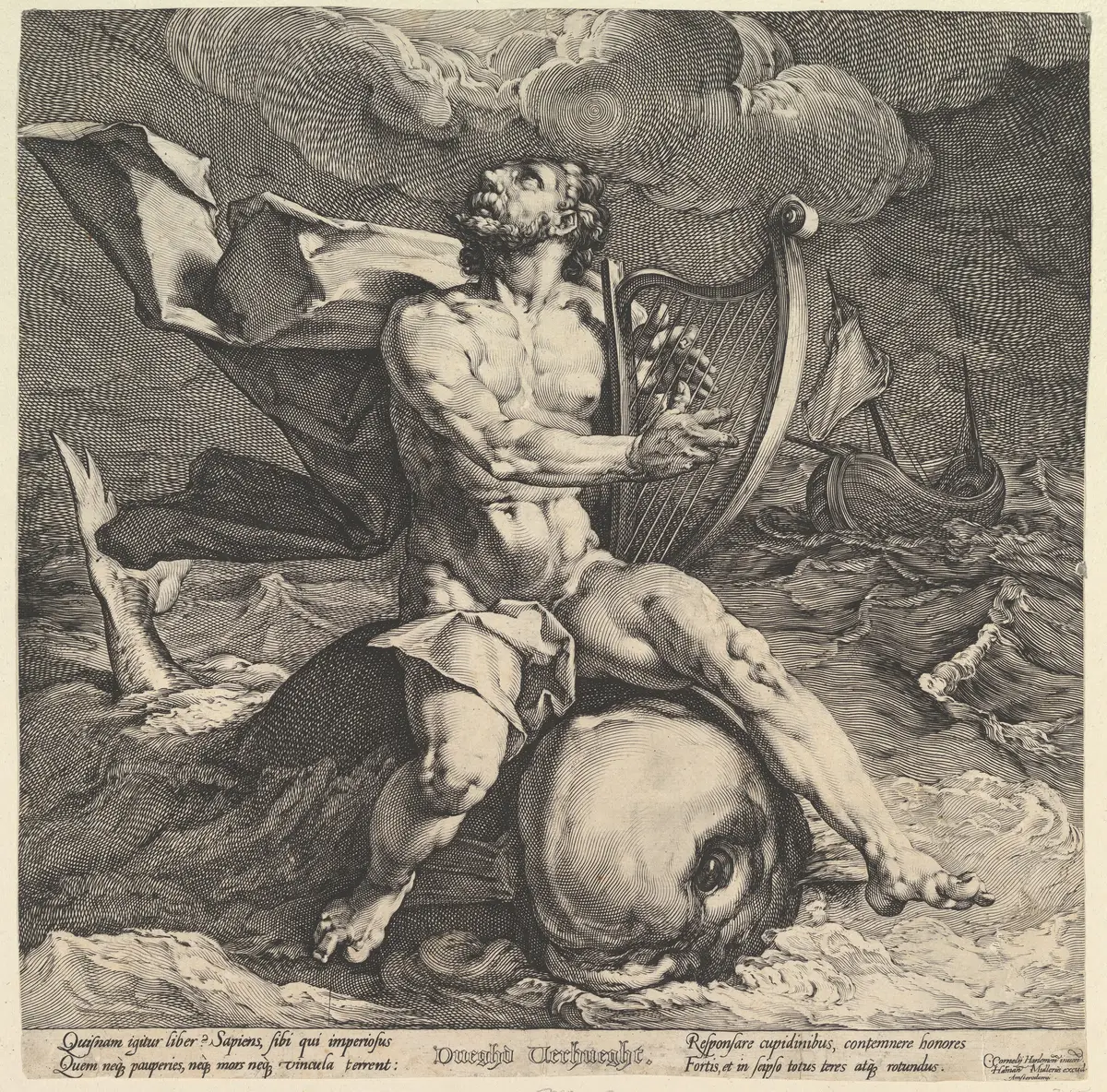
Engraving: a muscular Arion with his lyre rides a dolphin through rough sea
Arion of Methymnac. 600 BC

One last set

Arion was the most famous kitharode of his day, the star of Periander’s court at Corinth. He toured Italy and Sicily, came home rich, and somewhere at sea the crew decided to kill him for the money.

He asked for one last performance. He put on his full stage costume, stood on the stern, sang a high hymn to Apollo, and jumped. In Herodotus’s telling a dolphin carried him to shore. When the sailors reached Corinth claiming Arion had stayed behind in Italy, Periander brought them face to face with him.

Source: Herodotus, Histories 1.23–24
Image: Jan Muller after Cornelis van Haarlem, Arion on a Dolphin, c. 1599. The Met, Elisha Whittelsey Fund, 1956
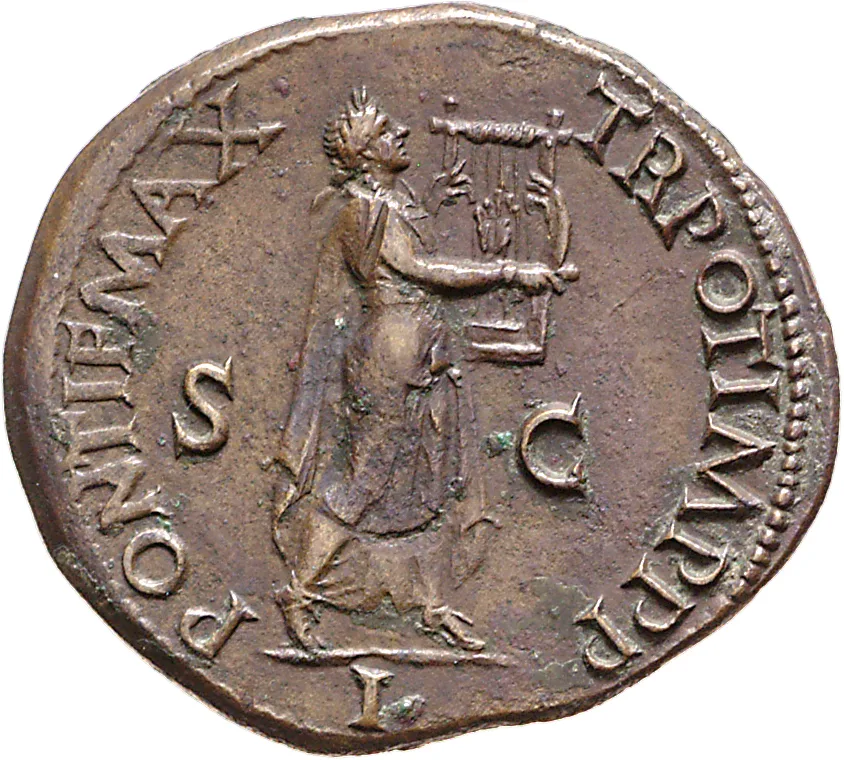
Bronze coin of Nero: a robed figure playing the kithara, with the letters S and C either side
NeroAD 66–67

Root access, no reviewers

Nero trained seriously as a kitharode. He did vocal exercises lying on his back with a lead plate on his chest, and in AD 66–67 he toured Greece, entering every great festival.

Suetonius says nobody could leave the theater while the emperor sang: women gave birth in their seats, and men faked their own deaths to be carried out. Cassius Dio counts 1,808 victory crowns. The lesson keeps: too much power and no honest critics will get you a perfect record you can’t trust.

Source: Suetonius, Nero 20–25; Cassius Dio, Roman History 63
Image: Bronze as of Nero, Lugdunum, c. AD 64, Apollo with kithara on the reverse. Münzkabinett, Staatliche Museen zu Berlin, 18225211. Photo: Dirk Sonnenwald
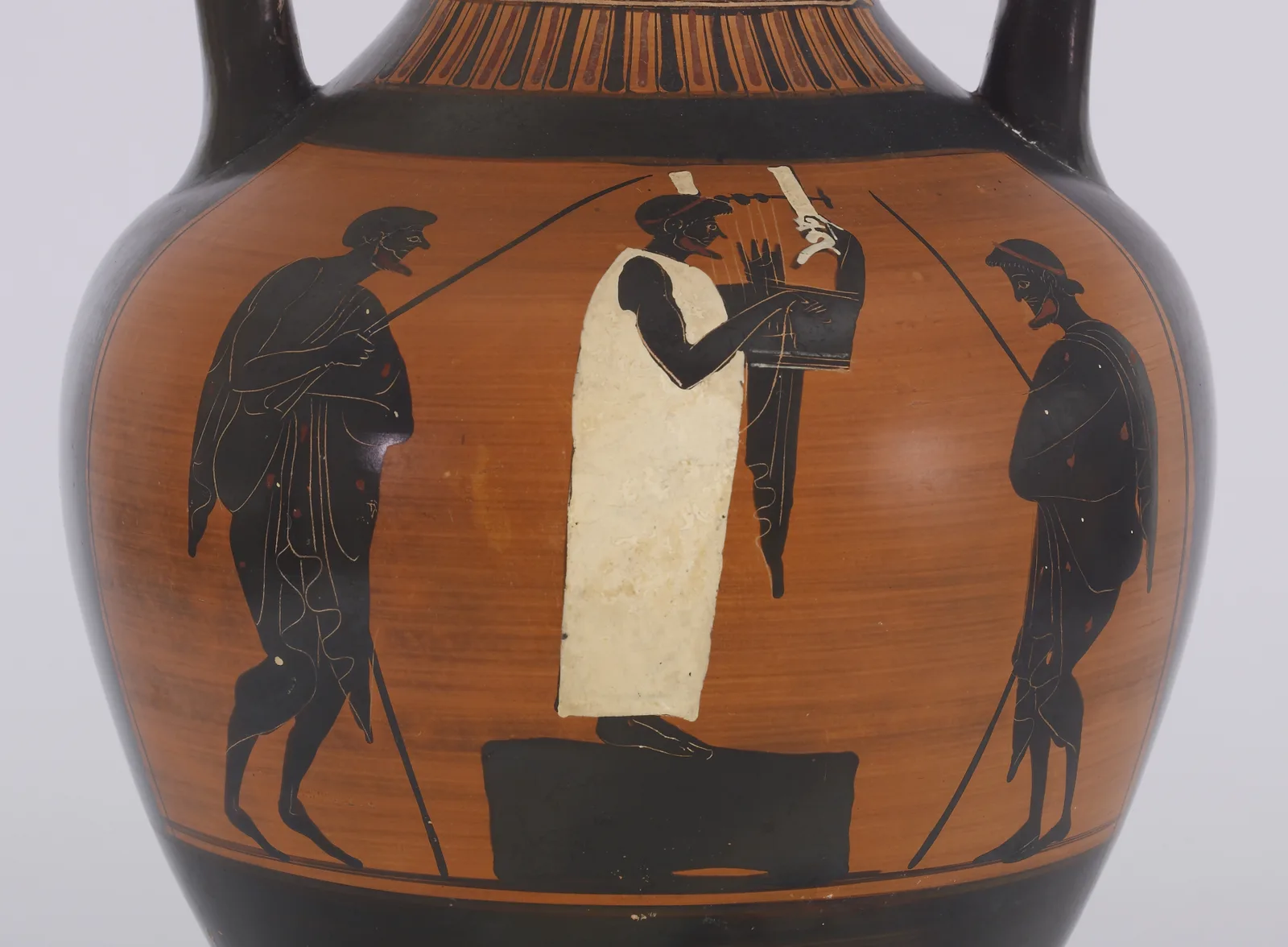
Black-figure amphora: a kitharode in a white robe stands on a podium between two judges1,000 dr.

The gold crown for first prize in kithara-singing at the Panathenaia, when a drachma was about a day’s pay for a skilled craftsman.

IG II² 2311 · Image: Walters Art Museum, 48.2107, CC0
586 BC

Before that year Delphi’s Pythian Games had no athletics. The oldest contest was a hymn to Apollo, sung to the kithara.

Pausanias 10.7
κιθάρα

In the Greek Bible, the harp David played to calm King Saul is a kithara.

1 Samuel 16:23, Septuagint
The guitar side

The instrument the company is named after

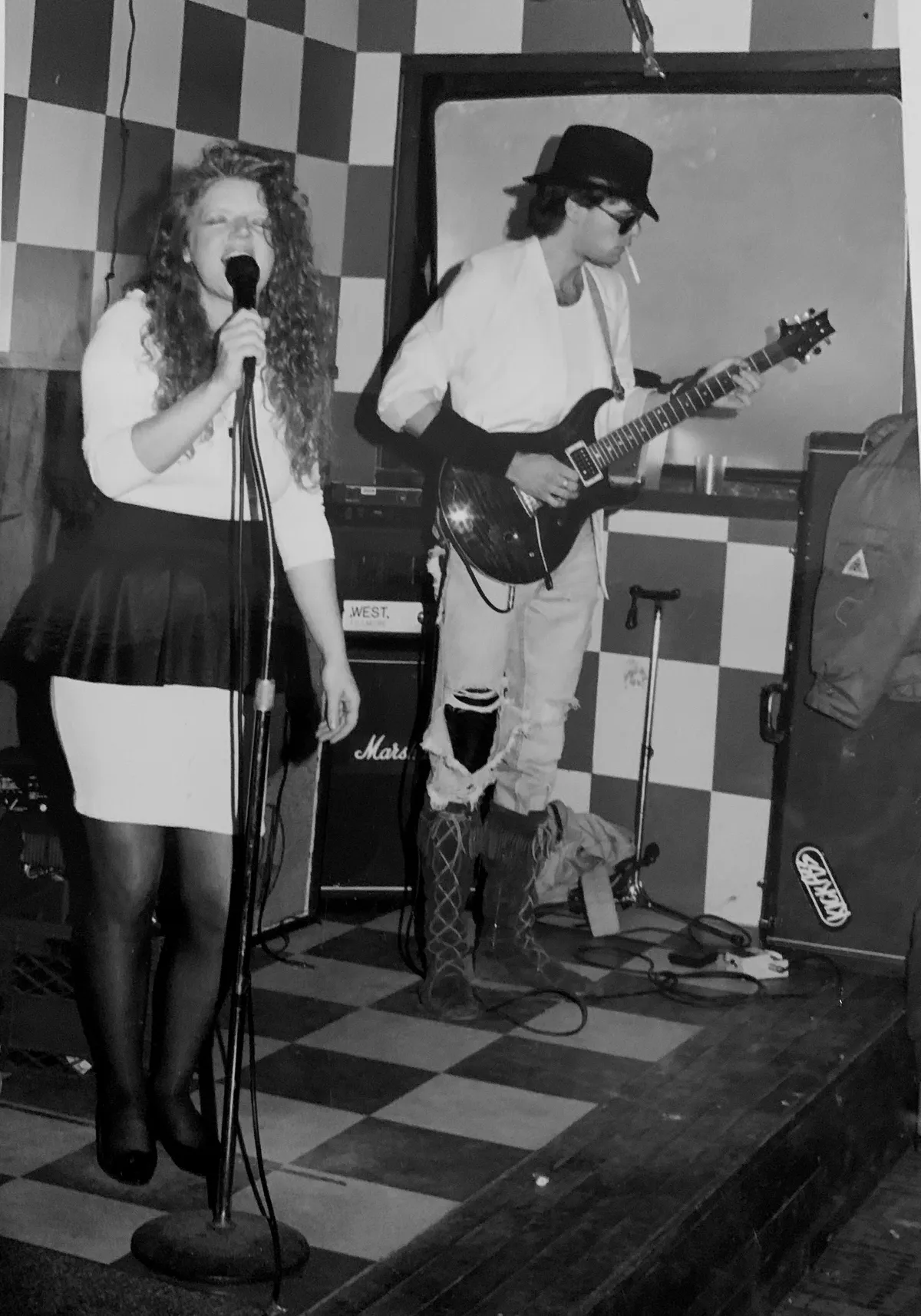
I’ve played guitar professionally for 37 years: lead guitar in bands, acoustic singer/song-writer solo shows, and my own records, published as SoulTech. Accepted by ASCAP in 2012 after committee review. Most of what I know about quality, nerves, risk-mitigation, and delivering live with no rollback, I learned on a stage first.

Black-and-white photo: a singer at the microphone and a guitarist in a hat and torn jeans on a checkerboard stage
Lead guitar with Tempo 66, Cross Street Station Ypsilanti MI, 1988, my 21st birthday
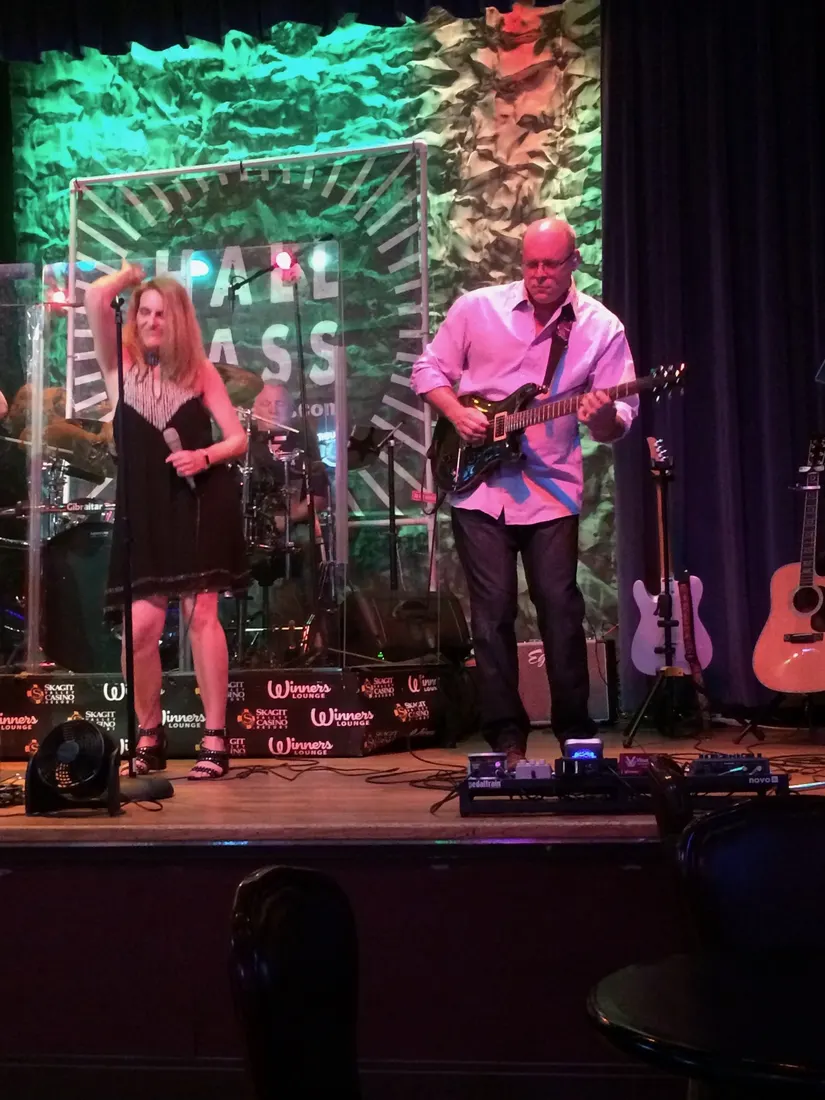
A singer and a guitarist performing on a club stage under green and purple light
Hall Pass, The Lime Kirkland WA, 2017
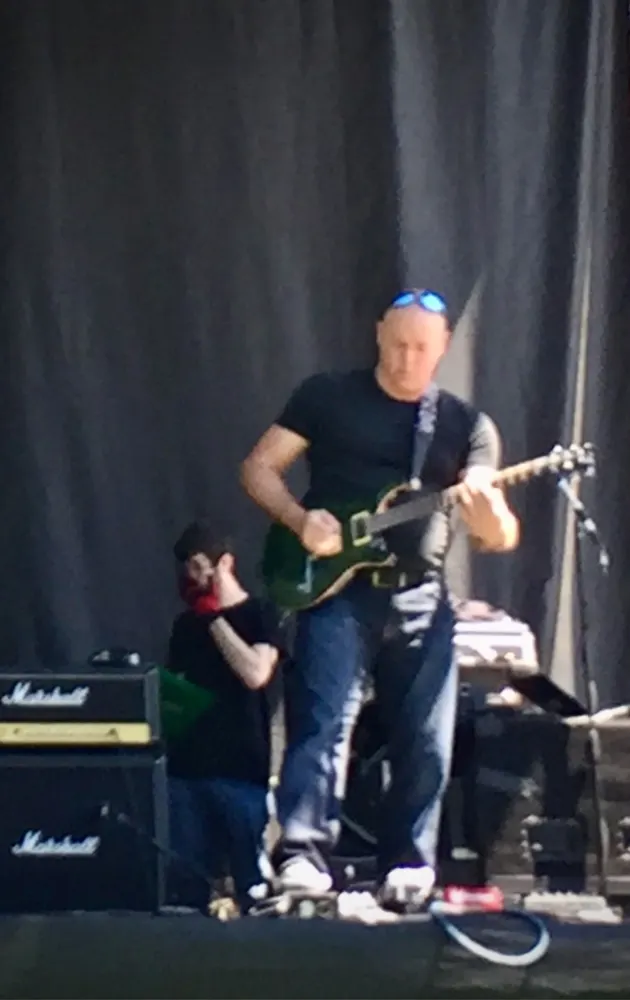
Playing a green electric guitar on stage in front of Marshall amplifiers
Hall Pass, Bite Of Seattle Seattle WA, 2016
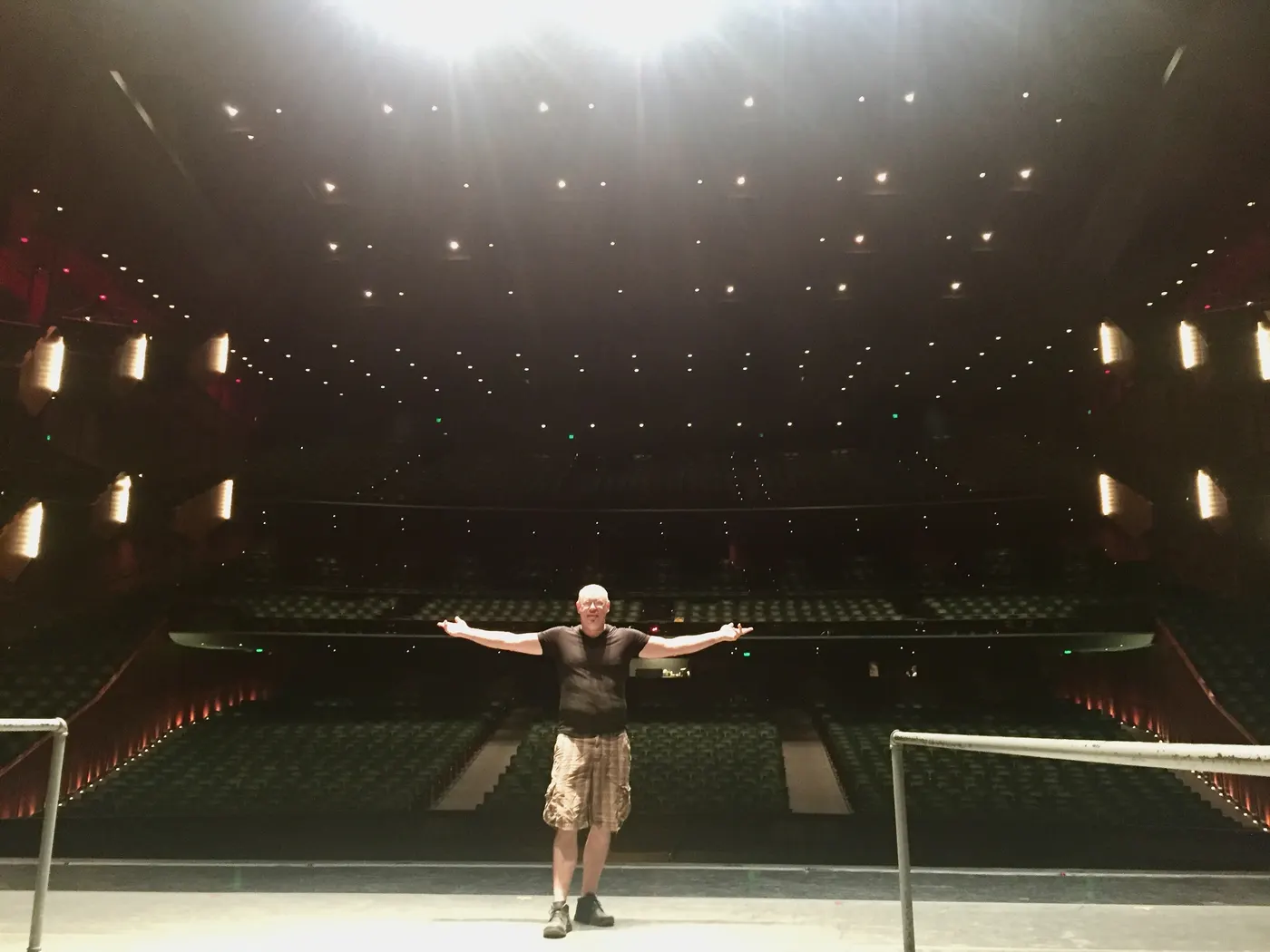
Standing alone on a large stage, arms out, facing an empty auditorium
Hall Pass, Benaroya Hall Seattle WA, PNW Ballet Fundraiser
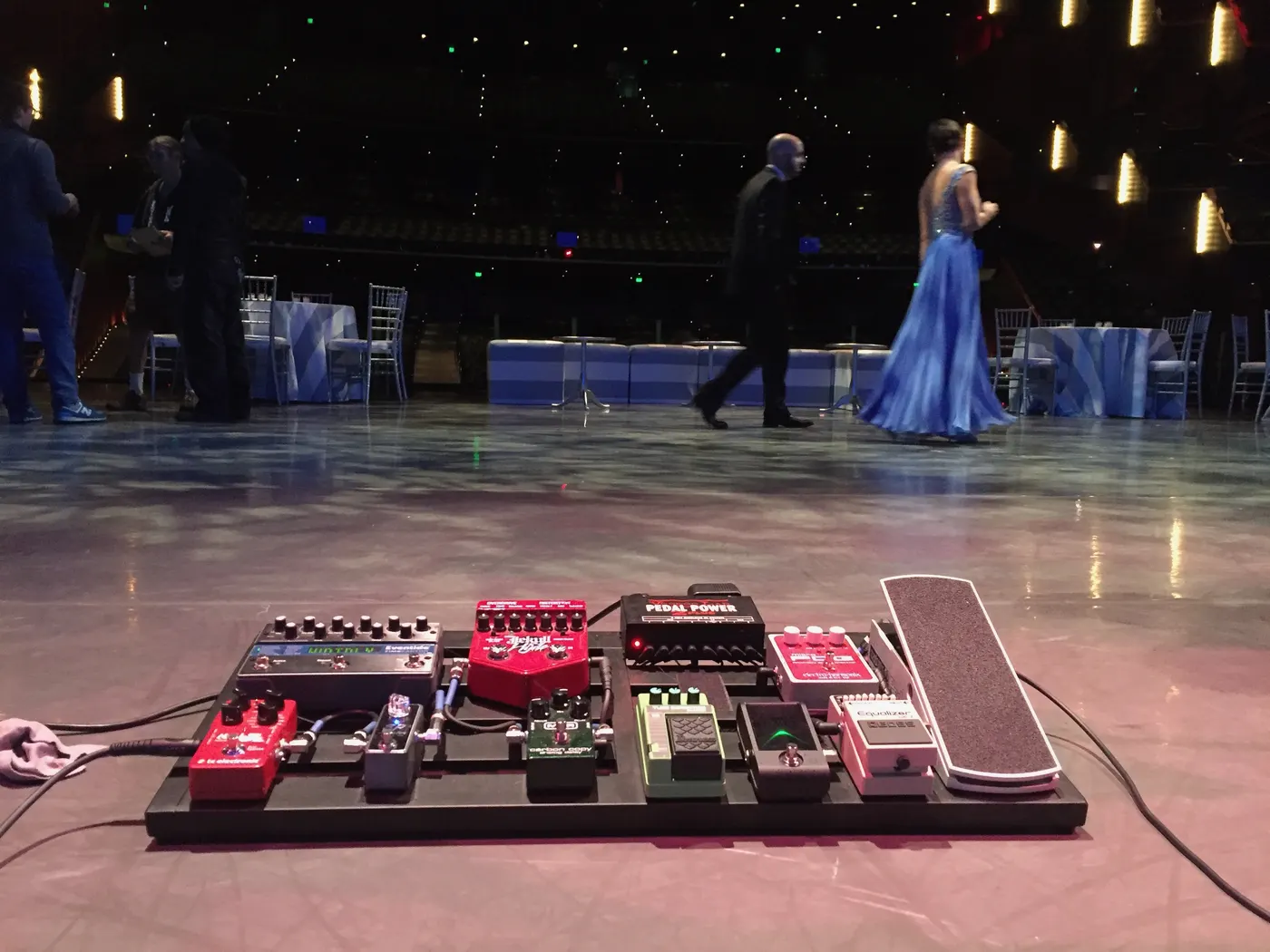
A guitar pedalboard on a ballroom floor during an evening event
Benaroya Hall Seattle WA, 2016
A five-piece band on a club stage with keyboards and guitars
Hall Pass, The Oxford Saloon Snohomish WA, 2016
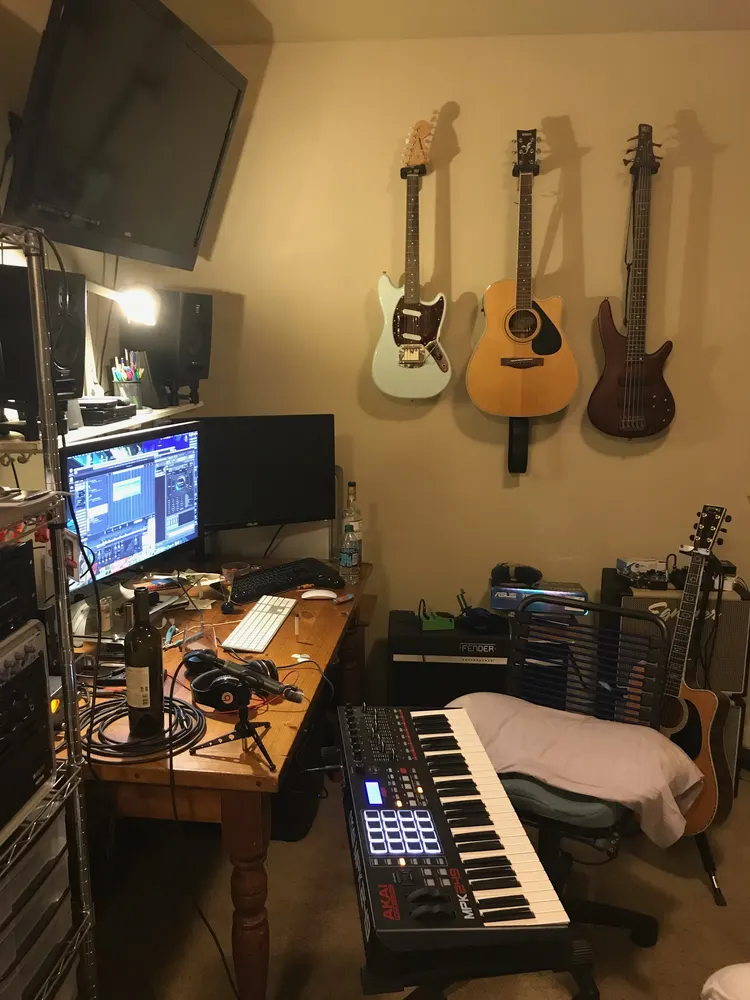
A home studio: guitars on the wall, monitors, an audio interface and a keyboard
The home studio / practice space
Performance History / Bio1987 → present
  1. 01
    First paid gig 1987

    Cross St Station, Ypsilanti MI, Tempo 66, All Guitar Work, Backup Vocals

  2. 02
    Lead guitar, Hall Pass 2015 — 2018

    Seattle pop/rock. A local station once ranked us seventh in the metro. Bars and festivals through corporate events and stadium gigs.

  3. 03
    Stage manager, Issaquah Salmon Days, Front St Stage 2017

    Ran stages for the region’s largest annual festival, 250,000+ attendees: booked the acts and MC’d.

  4. 04
    Singer/Song Writer, as SoulTech 2015 — present

    Performing Acoustic Covers and Originals, Wine Bars and Coffee Houses, Vocals and Acoustic Guitar. Greater Seattle Area

  5. 05
    Solo, as SoulTech 1998 — present

    Writing, recording and releasing my own music. Some of it has been placed in film and television.

Off stage

A single dad of two daughters, a motorcyclist, and an unrepentant shade-tree mechanic. Most of my instincts about legible systems came from taking things apart.

Published · SoulTech
  • Far Away2012 · single
  • Do You Feel2007 · placed in HBO's Empire Series - 3 shows
  • Take Me Away2002 · single
  • Other musicians perform as “Soultech” too (lowercase 't'). Mine are the ones listed here.